

 Five Debates That Defined Angola’s Global Tourism Investment Forum
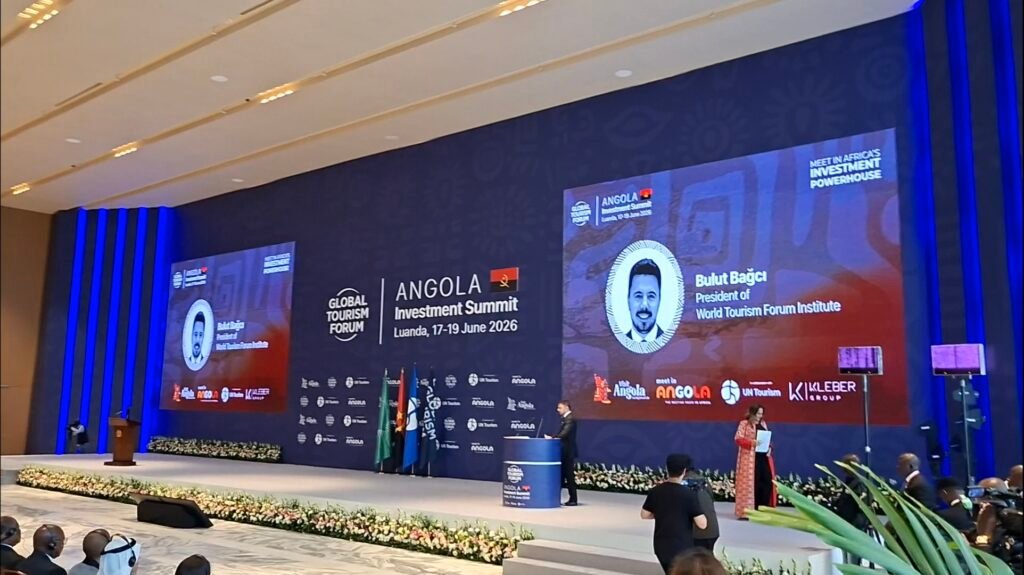
LUANDA — If the opening ceremony of the GTF Angola Tourism Investment Forum set the political and strategic tone, the panel sessions that followed gave that ambition its intellectual substance. Over the course of the summit, a wide range of international experts, industry executives and development specialists took to the stage to debate the conditions required for Angola — and Africa more broadly — to realise their tourism potential. The exchanges were candid, comparative and at times pointed. This article draws on a selection of those contributions. Many other speakers participated across the forum’s multiple tracks; what follows is not a full account, but a reflection of some of the most significant arguments made.
1. Africa’s 4% Problem: The MICE Opportunity
One of the forum’s most striking figures came from Frank Murangwa, Regional Director for Africa at the International Congress and Convention Association (ICCA). ICCA is the leading global body for the business events industry, with over a thousand members across more than a hundred countries, and has operated since 1963. Murangwa was direct about where Africa currently stands. According to ICCA data for 2025, Africa accounts for just four percent of the global MICE market. « This is not where we want to be, » he said. « We want to be a big player within the MICE industry. »
His diagnosis was equally clear. Infrastructure deficits, insufficient talent pipelines and weak air connectivity have collectively prevented the continent from competing for international congresses and conventions. However, Murangwa was optimistic about the trajectory. He pointed to Angola’s recent infrastructure investments and the launch of its national convention bureau — established just weeks before the forum — as meaningful steps in the right direction. He also announced that ICCA had formalised a destination partnership with Angola to support the country’s exposure to global event markets.
Murangwa then offered what became one of the forum’s most cited examples. Africa must own its narrative, he argued, and be physically present on the platforms where decisions are made. He described returning from INEX in Frankfurt — one of the leading global gatherings for MICE professionals — where basic questions about Africa’s safety and reliability continue to be posed. « If we’re not there to tell the story, to own it and showcase what we have, it is going to remain passive, » he said. The message was unambiguous: passive destinations do not attract active investment.
2. Rwanda as Mirror: A Decade of MICE Transformation
The forum heard a detailed account of how intentional strategy can transform a destination’s position. Craig, a Rwanda-based delegate with direct experience of his country’s MICE development, traced a journey that began roughly twelve years ago, when Rwanda had no meaningful profile as a business events destination.
What changed, he argued, was not the landscape — it had always been remarkable — but the institutional architecture. Rwanda developed a national MICE strategy. It established a dedicated convention bureau, which became the second of its kind on the African continent to operate at a professional standard. Every day, staff would identify international events, prepare bids, represent the country and compete for congresses against established destinations elsewhere in the world. The results were measurable. Today, Kigali ranks second in Africa as a MICE destination.
The investment dimension, Craig noted, extends well beyond delegate spending. When Rwanda successfully bid for and hosted a WTTC global summit, the lasting impact was not the conference itself, but the investment commitments that followed from executives and organisations who had seen the country firsthand. « Business events drive knowledge, » he said. « We go back different. » For Angola, he concluded, having the right framework and having just launched a convention bureau, the competitive phase is beginning. « Angola is going to start competing, and we’re going to see the numbers improving and growing. »
3. Aviation Protectionism: A Warning from TUI Group
The forum’s discussion of air connectivity moved beyond the familiar call for more routes. Vincent Snauwaert, Head of Government Relations for Destinations and Belgium at TUI Group, introduced a more uncomfortable argument: that the greatest barrier to tourism growth through air access is often not a lack of interest from airlines, but protectionism built into a country’s own regulatory framework.
« What is blocking growth in tourism is protectionism, and especially in air connectivity, » Snauwaert said. Many countries, he observed, take pride in their national carriers — legitimately so. But restricting access to protect those carriers from competition also restricts the total volume of tourists entering the country, ultimately harming the national airline it was meant to protect. His message to Angola was explicit. « All connectivity is good, » he said. A charter operator or low-cost carrier bringing tourists from new source markets creates demand that eventually benefits the national airline as well.
Snauwaert also raised a structural issue that affects tourism policy across many African governments: ministerial coordination. Tourism ministers frequently set ambitious growth targets, he argued, only to find those targets blocked by transport ministries whose priorities are not aligned. He called for Angola to establish a national cross-ministerial council capable of ensuring that the transport minister understands and supports the goals of the tourism sector. « Include this transport minister, » he said, « so that he understands what the goal is. »
4. Connectivity Is Not Just Airports
Lilla Harangozó, Head of Office at Capital European Affairs in Brussels and a specialist in European travel policy, offered a broader definition of connectivity that challenged the sector’s tendency to treat the issue as synonymous with flight routes. « Connectivity is much, much more than that, » she said. It encompasses digital infrastructure, payment systems, visa facilitation, data networks and cultural linkages — and, critically, the connections between tourism and the other sectors on which it depends.
Harangozó drew an instructive parallel with the Asia-Pacific region. Despite being geographically fragmented — a constellation of islands spread across a vast ocean — Asia-Pacific has significantly outpaced Africa in international visitor numbers. A key driver of that growth, she noted, was the expansion of Air Asia and the model it enabled: low-cost intra-regional connectivity that opened up routes previously inaccessible to most travellers. The implication for Africa was clear. Intra-African connectivity — between African countries themselves — remains one of the most underexploited opportunities on the continent. The infrastructure and political will to exploit it, she suggested, are now within reach.
She also reinforced a point made by others: Angola’s connectivity deficit with the world is actually less severe than its connectivity deficit with its own continental neighbours. Addressing that internal dimension, she argued, is as strategically important as attracting new long-haul routes.
5. Technology, Talent and the Experience Economy
Several panelists addressed the question of what kind of sector Angola is building — and for whom. Their answers converged around two themes: the role of technology in making destinations competitive, and the centrality of human capital to everything else.
Virginia Messina, CEO of the African Travel and Tourism Association (ATTA) — an organisation she has led since March 2026, bringing together roughly a thousand members from thirty-two African countries — situated technology within a broader argument about market differentiation. The competition for tourism arrivals has intensified sharply. « Today, it’s impossible to choose where to go, » she said, « and now we have new and upcoming destinations like Angola. » In that environment, destinations that adopt digital infrastructure early, use artificial intelligence to process traveller data efficiently, and tailor their marketing to specific source markets will gain a meaningful competitive edge. « You can’t sell to Germans like you sell to Mexicans, » she observed. AI, in her view, will not replace the tourism workforce — hospitality remains a people sector — but it will allow destinations to market themselves with a precision that was previously unaffordable.
Martin Barth, President and CEO of the World Tourism Forum Lucerne (WTFL), agreed on the primacy of the human dimension. « Hospitality is still a people’s business, » he said. « I don’t want to talk to a computer when I’m checking in. I want to have a smile welcoming me at the reception. » Governments, he argued, should focus on job creation in tourism precisely because it is a sector that technology will not hollow out. On training, he referenced the Kazakhstani model of state-funded study abroad combined with a contractual obligation to return — a hybrid approach he suggested could be adapted to build the specialised workforce Angola will need.
Mulemwa Moongwa, President of the Board of the Zambia Institute for Tourism and Hospitality Studies (ZITHS) and an expert in MICE development across Southern Africa, added a dimension that she felt had been underweighted in earlier discussions: the design of the visitor experience itself. The pandemic, she argued, was a clarifying moment for the MICE sector globally. When events went virtual, destinations discovered that what travellers and delegates had valued was not the meeting alone, but the experience surrounding it. The sector is now in what she called an « experience economy » — one in which every destination must ask not what it has, but what it offers that cannot be replicated elsewhere. « What is going to be unique if you saw the elephant from my side of the river than if it is on the other side? » she said. « It’s really a design issue. » She also noted that post-pandemic group travel now involves new considerations: liability frameworks, crisis repatriation plans, and the growth of travel insurance products among corporate clients — all elements of a value chain that destinations must be prepared to support.
Finally, Dr. Kashyap Choksi, Senior Vice President and Managing Director of Global Partnerships at the Global Humane Society, introduced a dimension absent from most tourism investment forums: animal welfare as a pillar of sustainable tourism. Climate change, he argued, is already reshaping global travel patterns, and Africa’s wildlife tourism offer is directly exposed to its effects. Conservation efforts that restore land corridors and allow free movement of wildlife — such as a 275-hectare property recently acquired by his organisation in South Africa’s Eastern Cape, intended to contribute to a connected corridor of approximately two million hectares — represent, in his view, a model for integrating animal welfare into mainstream tourism development. As younger demographics increasingly scrutinise the environmental and ethical credentials of the destinations they visit, this dimension, he suggested, will become a competitive factor rather than a secondary consideration.
A Forum That Moved the Conversation Forward
Taken together, the panel sessions at the GTF Angola Tourism Investment Forum produced something more than a catalogue of recommendations. They offered a sustained, comparative diagnosis of where Africa stands in the global tourism economy — and a set of concrete arguments about what needs to change. Africa’s four percent share of global MICE traffic, aviation protectionism, underdeveloped intra-continental connectivity, the gap between infrastructure investment and human capital development, and the imperative to own the continent’s own narrative: these are not new problems. But they were named with unusual directness in Luanda, by practitioners who have navigated them in their own markets. For Angola, a country that has spent the past year building the institutional and financial foundations for a serious tourism economy, the conversations held at this forum may prove as valuable as the memoranda of understanding signed alongside them.
