
“35 years of independence, 10 years of partnership – one shared vision.”
By Roman VASSILENKO, Ambassador of the Republic of Kazakhstan to the European Union
As Kazakhstan celebrates the 35th Anniversary of its Republic Day on Oct. 25 and approaches the 10th anniversary of the signing of the Enhanced Partnership and Cooperation Agreement (EPCA) with the European Union in December 2015, it is quite fitting to reflect on how far our partnership has come – and where it is heading next.
These twin milestones are not just symbolic. They represent the twin transformation of a young, forward-looking nation into a confident regional actor and a reliable global partner, and of a developing relationship with the EU into a mature multifaceted strategic partnership.
In his Republic Day address on Oct. 24, President Kassym-Jomart Tokayev highlighted Kazakhstan’s remarkable progress: since 2019, the national economy has grown by 16%, reaching almost 137 trillion tenge, or USD 291 billion, in 2024. Over the same period, GDP per capita increased by 47%, reaching USD 14,400 – one of the highest levels in the CIS. Such achievements reaffirm that Kazakhstan today has the largest and most diversified economy in Central Asia, underpinned by strong macroeconomic fundamentals and steady modernization.
It is this solid foundation that has created a fertile ground for expanding our cooperation with the European Union, our trusted and strategic partner. Over the past decade, Kazakhstan and the EU have built a relationship defined by shared values, practical results, and a clear vision for the future.
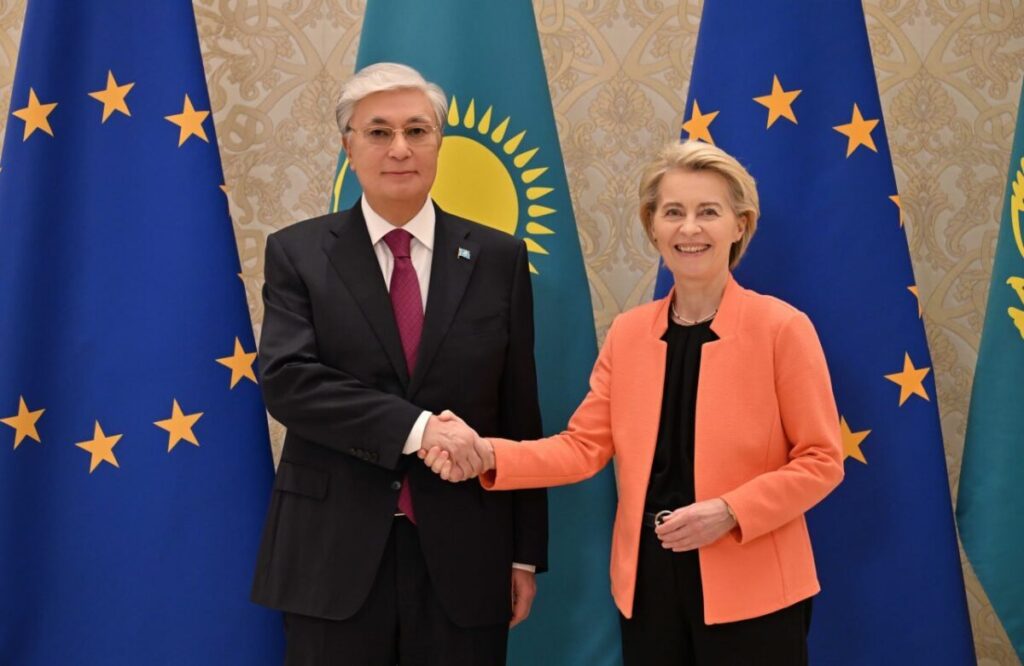
The first half of this year was marked by an especially dynamic political dialogue. In April, President Tokayev held important meetings with President of the European Council António Costa and President of the European Commission Ursula von der Leyen, where the sides reaffirmed their mutual commitment to strengthening the strategic partnership and expanding cooperation across trade, energy, and connectivity.
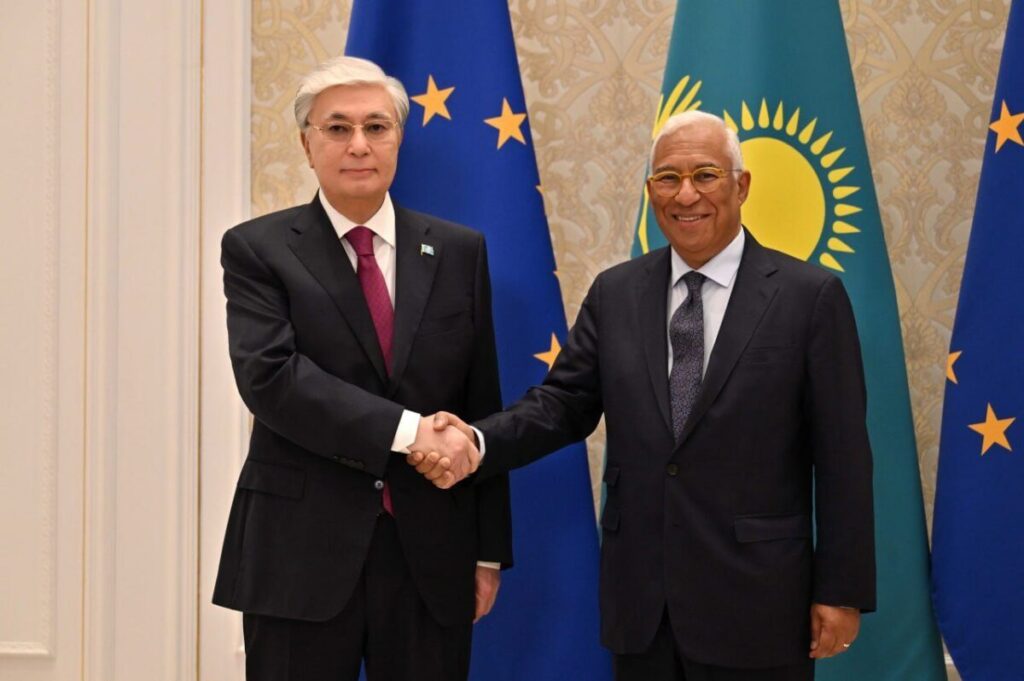
Photo credit: Akorda
Earlier, in March, EU High Representative for Foreign Affairs and Security Policy Kaja Kallas visited Almaty, engaging in substantive discussions with our leaders on regional stability, energy transition, and the future of EU–Central Asia relations. These exchanges underscored the high level of trust and mutual interest that continue to drive the Kazakhstan–EU partnership forward.
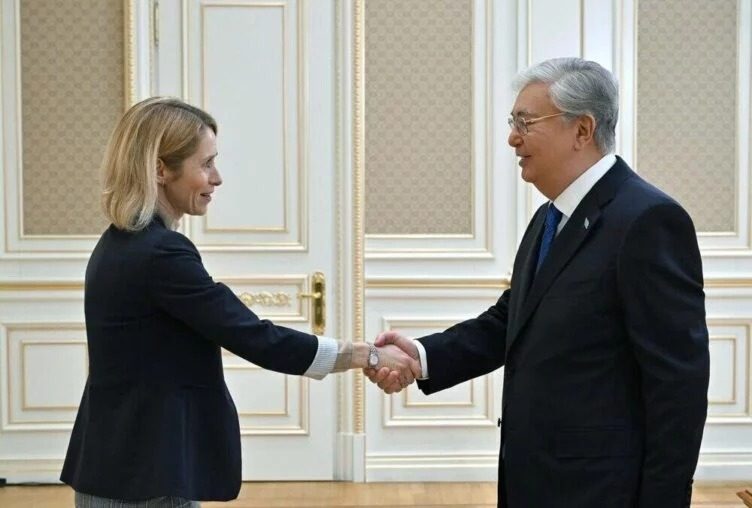
Photo credit: Exclusive.kz
That vision was reaffirmed very recently when the newly appointed Minister of Foreign Affairs, Yermek Kosherbayev, received the Ambassador of the European Union to Kazakhstan, Ms. Aleska Simkic, as one of his very first official guests from among foreign envoys. In diplomacy, gestures carry meaning – and this one underscored how central the European Union remains to Kazakhstan’s foreign policy priorities.
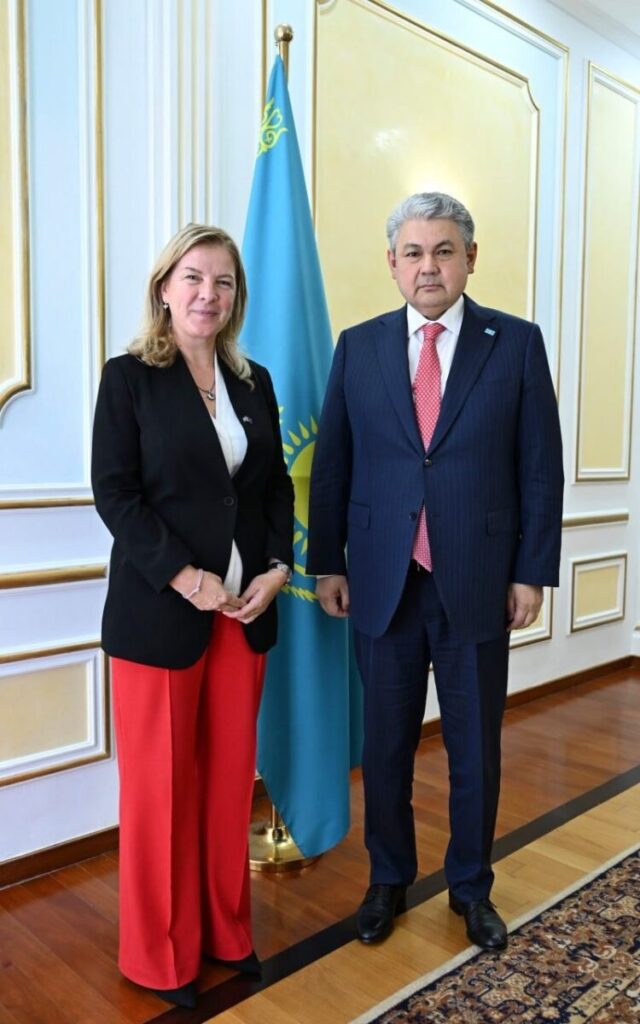
Photo credit: MFA.kz
The partnership’s momentum and evolution was further demonstrated by the visit of Deputy Minister of Foreign Affairs Arman Issetov to Luxembourg on Oct. 20, where he attended the ministerial meeting to discuss Cross-Regional Connectivity Agenda whose aim is to link the EU with Central Asia via Türkiye and the South Caucasus. On the sidelines of the meeting he held fruitful consultations with High Representative Kaya Kallas, European Commissioner Josef Sikela, and EU Special Envoy on Central Asia Eduards Stiprais on enhancing connectivity, trade, and political dialogue.
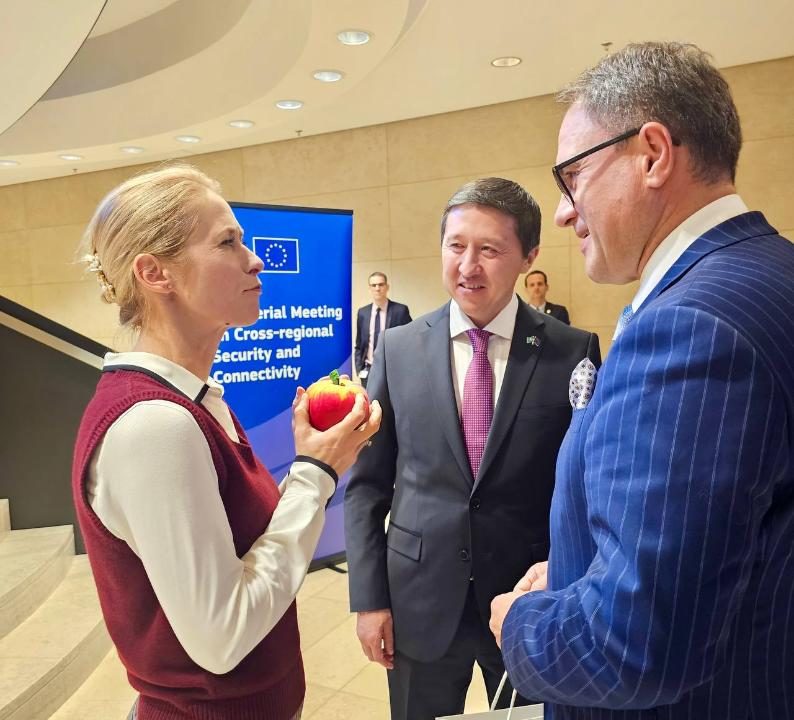
These exchanges reflect the mutual ambition to keep our relationship dynamic – translating strategy into action.
Looking ahead, Kazakhstan and the EU will soon continue this productive dialogue at upcoming high-level gatherings, including the Kazakhstan–EU Cooperation Council and the Parliamentary Cooperation Committee meetings. These platforms are vital for aligning our strategic priorities and setting a shared agenda for the future.
Our economic cooperation already speaks volumes. In 2024, mutual trade turnover reached a record USD 50 billion, accounting for the lion’s share of all EU–Central Asia trade. Currently, there are about 3000 European companies working in Kazakhstan. These figures are not just a record – it’s a reflection of trust, interdependence, and opportunity.
As President Tokayev emphasized, Kazakhstan is determined to modernize and diversify its economy, with a particular focus on the transport and logistics sector – a strategic industry where our partnership with the EU can truly flourish. Kazakhstan aims to become a leading logistics hub of Eurasia, connecting markets from East to West through efficient and sustainable corridors such as the Transcaspian International Transport route. In this effort, European technology, investment, and expertise are invaluable.
Our cooperation continues to expand across key priority areas: trade and investment, transport and logistics, critical raw materials (CRMs), green transition, agriculture, and people-to-people ties. Together, we are building cleaner energy systems, resilient supply chains, and vibrant educational and cultural exchanges that bring our societies closer.
Indeed, it is these human connections – the students, researchers, and innovators who embody our shared aspirations – that give this partnership its heart.
As we mark Kazakhstan’s 35th Republic Day and the 10th anniversary of EPCA, we celebrate not only past achievements but also the promise of what’s to come. Our nations may be separated by geography, but are thrust towards each others by a shared vision and a shared determination to build a more stable and sustainable Eurasia.
Just as the great Kazakh steppe connects horizons, our cooperation with the European Union connects continents – a partnership rooted in trust, progress, and a shared belief in the power of dialogue. As the Kazakh proverb reminds us, Birlik bar zherde – tirlik bar (“Where there is unity, there is life”). Only by working together, can we achieve sustainable growth and shared prosperity.
Together, Kazakhstan and the European Union are not only advancing our mutual interests – we are building a greener, smarter, and more connected future for generations to come.