

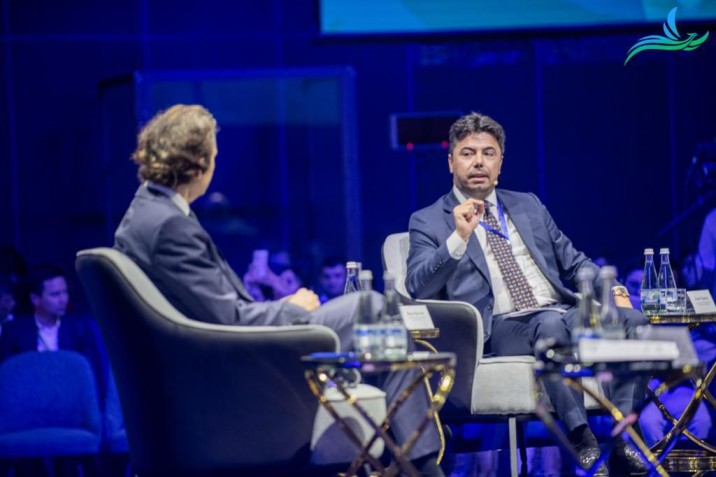
Bulut Bağcı’s recognition by visit.brussels is more than an award. It confirms the rise of a new tourism economy in which Brussels is not merely a destination, but a home for billion-dollar investment decisions.
Brussels — In the old tourism economy, influence was measured by arrivals, hotel occupancy and destination campaigns. In the new one, influence is measured by the ability to set the table, direct capital, mobilise political will and turn tourism into economic infrastructure.
That is the world Bulut Bağcı, President of the World Tourism Forum Institute, is helping to shape.
His recognition by visit.brussels as a 2026 Business Events Ambassador Awardee is not simply a business-events honour. It is a signal that tourism is entering a different league — one where the sector is no longer judged only by the movement of travellers, but by the movement of capital, governments, infrastructure and long-term investment decisions.
Bağcı has been recognised for his role in bringing the Global Tourism Forum 2026 to Brussels. Yet the deeper story is not about one event. It is about a larger shift in the global tourism economy: from promotion to capital allocation, from destination marketing to investment strategy, from hotel occupancy to presidential agendas.
For Bağcı, Brussels is at the centre of that shift.
“We make billion-dollar investment decisions in Brussels. For me, Brussels is not a destination; it is a home. We set the table, and we bring the right leaders, investors and governments to that table. Our mission is to move tourism beyond the perception of a simple sector and place it firmly on the agenda of presidents, heads of state and national development strategies. Tourism is economic infrastructure,” said Bulut Bağcı.
That statement captures the new power logic of tourism. Brussels is not merely hosting another forum. It is becoming a stage where the future of tourism investment is being discussed, structured and directed.
For decades, tourism was treated as a sector of promotion. Countries presented their beaches, cities, culture and heritage to the world. Governments spent money on campaigns. Tourism boards attended fairs. Hotels waited for visitors. But the destinations that will lead the next decade will not be the ones with the best slogans. They will be the ones that can attract and deploy serious capital.
A country cannot become a global tourism power without airports, roads, hotels, convention centres, ports, energy systems, aviation connectivity, skilled labour, investor confidence and political stability. These are not marketing assets. They are national infrastructure.
This is where Bağcı’s approach differs from the old tourism model. He is not positioning tourism as a soft industry. He is positioning it as an investment economy and a matter of national strategy. Through the World Tourism Forum Institute, Bağcı has placed tourism at the intersection of public policy, infrastructure development, foreign direct investment and international diplomacy. His work is not simply about bringing people to destinations. It is about bringing capital to the systems that make destinations possible.
In that sense, Bağcı is not a broker of tourism opportunities. He is the figure setting the table where governments, investors and institutions decide the future of tourism economies.
The central idea behind the Global Tourism Forum is direct: tourism should not wait outside the rooms where national development is decided. It should be inside those rooms.
Bağcı’s model is built around that conviction. The World Tourism Forum Institute does not merely organise events. It convenes the table. It invites governments, investors, heads of state, ministers, developers, hotel groups, aviation leaders, financial institutions and international organisations into the same strategic environment.
The objective is not only discussion. The objective is decision.
“We set the table” is not a networking phrase. It is a description of institutional power. It means creating the environment where capital meets political will, where governments meet investors, and where tourism projects move from ambition to execution.
In Bağcı’s view, tourism has been underestimated for too long because it has been framed too narrowly. It has been treated as a service sector, when in reality it is a development platform. Tourism creates jobs. Tourism attracts foreign direct investment. Tourism builds airports, roads and hotels. Tourism strengthens national brands. Tourism improves air connectivity. Tourism stimulates real estate, hospitality, culture and trade. Tourism brings countries into the global conversation.
That is why Bağcı insists on a sharper definition: tourism is economic infrastructure.
The most ambitious part of this vision is not to increase the visibility of tourism professionals. It is to change who talks about tourism. For decades, tourism has often remained inside the boundaries of tourism ministries, promotional agencies and industry associations. Bağcı’s objective is to move it higher — to the level of presidents, prime ministers, finance ministries, investment authorities and national development councils.
That matters because major tourism transformation cannot happen at ministry level alone. A tourism minister can promote a destination. But airports require national planning. Roads require infrastructure budgets. Resort zones require land policy. Aviation requires bilateral agreements. Hospitality investment requires financial incentives. Security requires state capacity. International confidence requires political leadership.
This is why tourism must be on the agenda of heads of state.
The Global Tourism Forum 2026 is expected to bring together senior government representatives, investors, tourism leaders, international institutions, financial organisations and private-sector executives. Its agenda will focus on tourism investment, infrastructure, aviation, hospitality, public-private partnerships, sustainability and destination competitiveness. But beneath those themes is a more powerful message: tourism is no longer only about where people travel. It is about where money moves, where governments align and where national futures are planned.
Brussels gives this strategy weight. As the political and institutional heart of Europe, it is home to European institutions, diplomatic missions, global associations, regulators and policy networks. It is a city where political influence, economic strategy and international cooperation meet. For Bağcı, that makes Brussels more than a host city. It makes it the European home of the Global Tourism Forum.
The recognition by visit.brussels reflects this strategic relationship. It shows that Brussels is not only interested in events that fill hotel rooms. It wants events that bring influence, investment, institutions and international decision-makers. That is exactly what the Global Tourism Forum represents.
A high-level tourism investment forum does more than create temporary visitor traffic. It creates conversations that can lead to long-term partnerships, investment pipelines and policy alignment. It brings governments and capital into the same room. It allows Brussels to strengthen its profile not only as a political capital, but as a platform for global economic dialogue.
The old tourism economy asked: how many visitors can we attract?
The new tourism economy asks: how much capital can we mobilise, and who is sitting at the table when decisions are made?
That is the shift.
Bulut Bağcı’s recognition by visit.brussels is therefore not just a local honour. It is part of a bigger story about the transformation of tourism itself. Tourism is no longer only about travel. It is about capital, infrastructure, political will, national competitiveness and the ability to turn destinations into investable economies.
Bağcı’s message from Brussels is clear: the future of tourism will be shaped by those who can set the table, direct capital and bring tourism to the agenda of presidents and national leaders.
That is why Brussels matters.
It is where institutions meet. It is where investment conversations happen. It is where political will can be converted into global partnerships. And for Bağcı, it is where billion-dollar tourism decisions are being made.
Brussels is not just a destination.
It is home.
